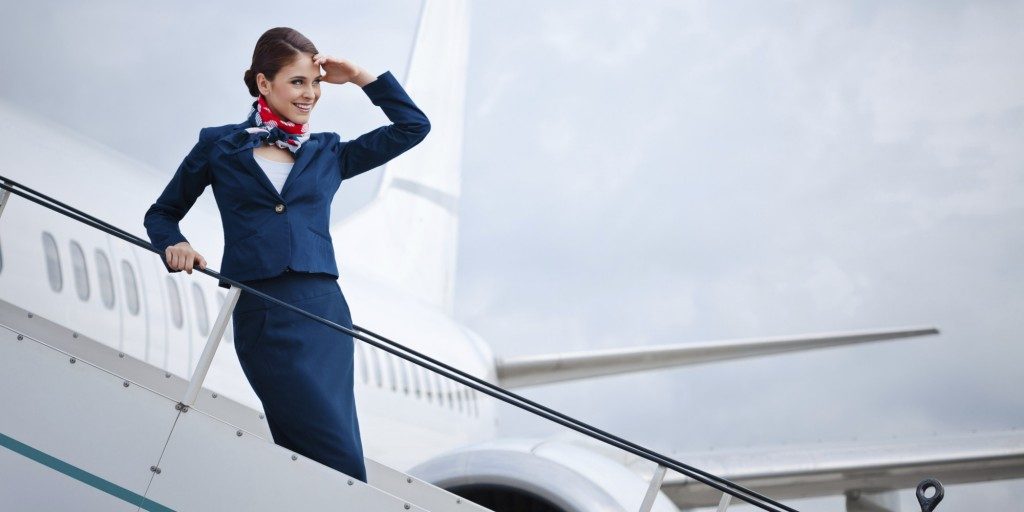
Those who say that flight attendants are paid low could only mean they are in their first few years of their job or are serving regional airlines. Although you do not get super rich being a flight attendant, the pay is quite good. It becomes even better if you choose to work on your vacation days giving you extra flying hours. Lucrative packages are given by airline companies to flight attendants that include life and health insurance, membership to credit union and the opportunity to buy stocks from the company. A retirement plan is also very enticing. There is a maximum age requirement for a flight attendant but once you have reached your peak, you can be either given the chance to work as ground crew or you can be offered a teaching job from their training schools or you can completely give it up and enjoy retirement.
You also have the chance to meet new people and even celebrities. You gain confidence in yourself because you deal mostly with businessmen and influential people. Being a flight attendant is such an exciting job so much that you may not consider it a job at all. Unlike in other eight-hour job where boredom can be reached anytime, it does not hold true in flight attendants. Every flight gives you a different experience, because there are different situations that you will be facing. The scenery and atmosphere is forever changing. You’re primary motivation is to be able to make passengers feel comfortable and cared for all throughout the flight. And you would know if you have achieved this goal if the same passengers choose your airline in their future travels. Plus the fact that you are not talking of any take home work. Once the last passenger goes and you’re done with your flight report, you’re good. You can spend the rest of your day off doing other stuff (like fixing your credit, perhaps).
A pool of flight attendants becomes a family away from home. The next thing you know, you have gained a best friend when your first flight is over, which is unlike a lot of other female-dominated careers that can be lonelier. It becomes easy for you to open up to your co-worker probably because you are spending so much time together. It becomes fun going to work knowing that you have gained a family. They help each other, even when one is suffering from financial and family problems. You can expect everyone to raise money for a sick or injured family. They give each other full support, after all, they become one team with one goal.
You get to see the world for free! It’s like a training ground for being independent and being responsible. And when you are able to help deliver a baby while on board, or when you get to assist a medical situation, or even help handicapped passengers, you get a great sense of fulfillment. Your overall personality is developed in this line of work.